Ten brands and the evaluation lens
Leaders are judged on three axes: technical innovation and R&D; clinical value and compliance (NMPA/FDA/CE); and market influence and commercialization. Products cluster in imaging-aided diagnosis (fundus, coronary, stroke), a clear 'software + imaging' character.
An overlooked fact: hardware materials dominate cost
On the supply side of AI imaging equipment, raw materials are ~85% of cost (e.g., magnets RMB700k–800k each, tubes RMB110k–130k); core components were long bottlenecked, and mid/low-end imaging components are now largely localized. The point: however smart the algorithm, it still rides on reliable hardware and materials.
The BIO angle
FAQ
How big is the AI medical-device market?
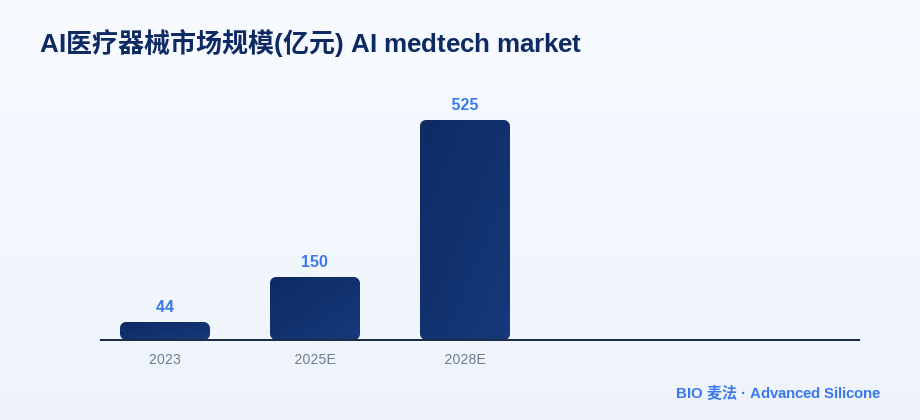
From RMB125m to RMB4.37bn over 2019–2023, projected ~RMB52.485bn by 2028; 81 devices held Class III certificates by end-2023.
Who are the leading Chinese firms?
Often-listed leaders include Shukun, Deepwise, Infervision, United Imaging, Pulse Medical, Neusoft Medical, Airdoc, Keya Medical, Xingmai and Arteryflow.
Why do materials remain the base?
Raw materials are ~85% of AI imaging-device cost and core components were bottlenecked; beyond algorithms, reliable hardware and materials decide whether a product truly deploys.
Related reading
- The Century-Long Catheter Infection War: Foley Design, CAUTI and the Coating Path | BIO Insights
- Nystagmus Device Approved: After the Breakthrough, Commercialization Begins | BIO Insights
- A Double Breakthrough in Minimally Invasive Glaucoma Care: RF Ablation and Suprachoroidal Drainage | BIO Insights
Note: an original analysis compiled from public industry information; figures and conclusions per official/original sources. Not investment advice.
Building in China's medical-device market?
From NuSil™ medical-grade silicone screening to current TDS/SDS coordination, development samples, and lot-traceable supply in China, share your device requirements directly with our Shanghai team.