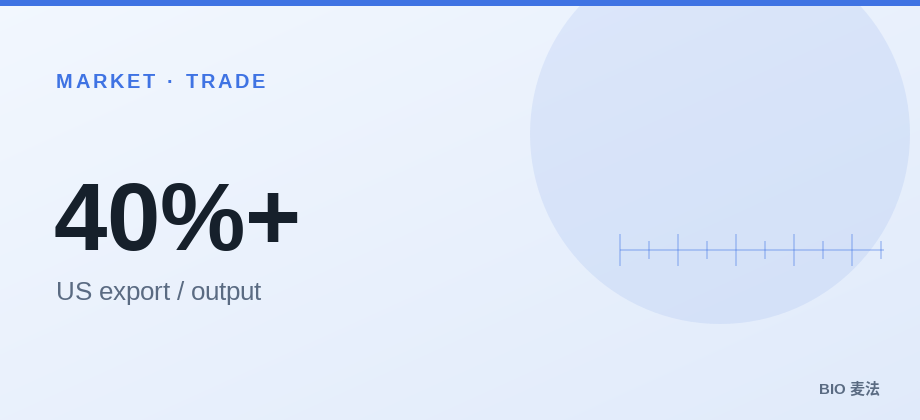
Export/output ratio: a thermometer of trade globalization
Before 1990, global device trade was roughly negligible and US firms relied more on home demand. The export share of output then rose steadily, marking a shift from 'domestic-demand-driven' to 'global specialization'.
Capacity shifts and specialization
After the 1994 NAFTA, substantial capacity moved to Mexico and Costa Rica — context for the gap between 'output value' and 'export value' bases.
How big is the pie today
Today cross-border device trade is ~$300B+, while the global market is ~$600B+. So about half the market flows through cross-border trade and half is absorbed by domestic demand.
The BIO angle
FAQ
When did global device trade form?
Roughly as export shares of output rose in the US and others after 1990; before that, reliance on domestic demand was greater.
How big are the global device market and trade?
Today the market is ~$600B+ and cross-border trade ~$300B+, about half flowing through trade.
How did NAFTA affect the device industry?
After 1994, substantial capacity moved to Mexico and Costa Rica, affecting how output and exports are counted and distributed.
Related reading
- Is China a Medical-Device Exporter or Importer? Finding Position from Trade Data (1) | BIO Insights
- China's Core Medical-instrument Exports: HS 9018 vs Germany and the US (2015–2024) | BIO
- How Big Is US Medical-Device Output? Finding Position from Trade Data (4) | BIO Insights
Note: an original analysis compiled from public industry information; figures and conclusions per official/original sources. Not investment advice.
Building in China's medical-device market?
From NuSil™ medical-grade silicone screening to current TDS/SDS coordination, development samples, and lot-traceable supply in China, share your device requirements directly with our Shanghai team.